Peak Hours5:00 AM – 9:00 AM (Busiest & most lively)
TransportationShared tour boat or private sampan from Ninh Kieu
Nestled along a gentle branch of the Hau River winding through Can Tho—the heart of the Mekong Delta—Cai Rang Floating Market stands as the most lively testament to southwestern river life. Alongside storied counterparts such as Cai Be (Tien Giang), Nga Bay (Hau Giang), and Long Xuyen (An Giang), it preserves an authentic rhythm of life that has weathered centuries of change.
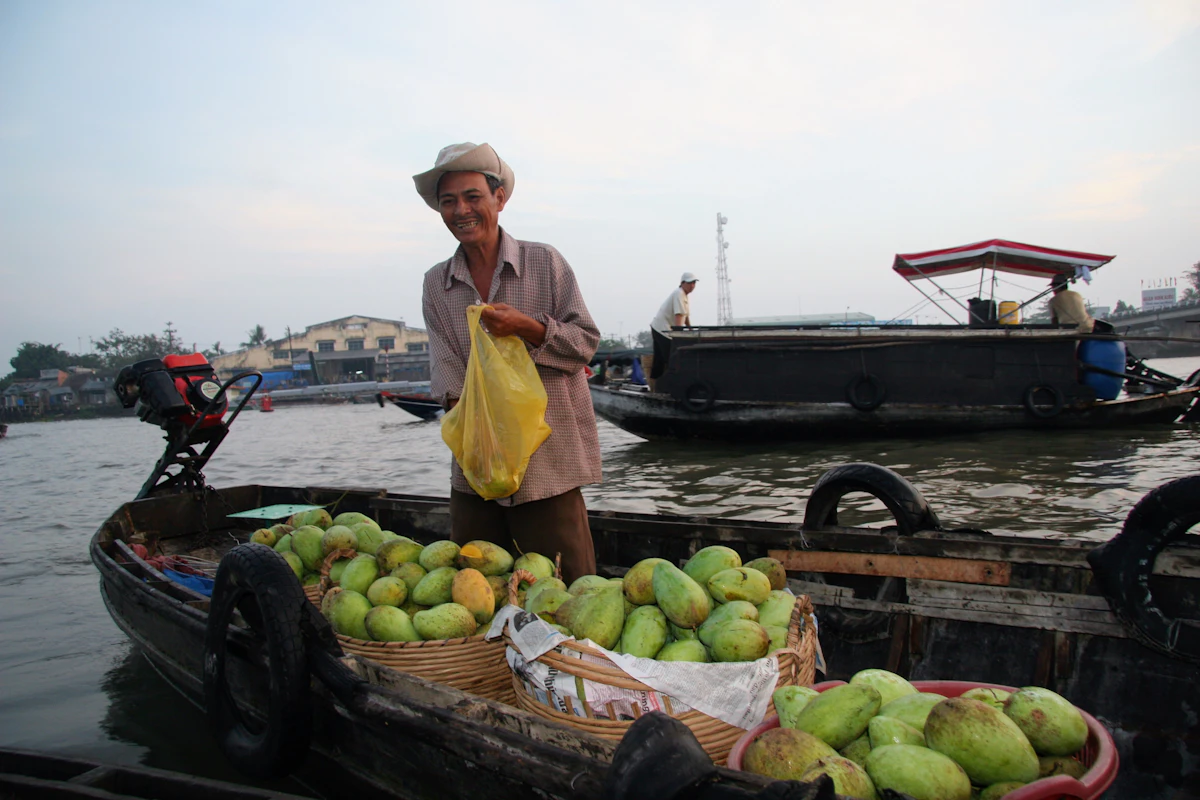
Boats selling mangoes at Cai Rang floating market, Can Tho
Cai Rang floating market starts trading before dawn and thins out after about 8 or 9 a.m., so to see the boats at their busiest you need to be at Ninh Kieu pier while it is still dark.
Origin of the Name: From the Khmer "Karan" Earthen Stove
The genesis of the floating market arose naturally from the intricate labyrinth of waterways across the Mekong Delta, where waterborne trade evolved into an essential lifeline. Yet few travelers know that the name Cai Rang carries a captivating linguistic journey.
According to local research, the name originates from the Khmer word “Karan”, denoting a “Ca Rang”—a traditional clay cooking stove crafted by artisans in the Tri Ton region (An Giang). Centuries ago, potters navigated these waterways to peddle their earthen stoves, congregating in large numbers at this river junction. As “Karan” was difficult for southern Vietnamese tongues to articulate, colloquial pronunciation gradually transformed it into “Cai Rang.”
“The ‘Cay Beo’ bamboo pole is more than a quiet marketing tool—it is the soul of authentic river trade in the southern delta.”
The Art of Silent Marketing with “Cay Beo”
Amid wide expanse and crashing river wakes, how do buyers know what a boat offers? The answer lies in the Cay Beo—a tall bamboo pole hoisted high at the bow of each vessel.
Whatever goods are on offer—pineapples, watermelons, bananas, mangoes, or farm-fresh tubers—are hung dangling from the tip of the pole. Navigating market-goers need only gaze through the morning mist from afar to spot their desired produce. There is no shouting, no blaring horns, and no need for modern commercial signs.
Local Foodie Insider Tip
Skip the hotel breakfast buffet. Board a boat before 5:30 AM to catch the river sunrise, then pull alongside a floating food vendor for a piping-hot bowl of crab noodle soup (bun rieu) or traditional rice noodles (hu tieu), handed directly across the gunwales.
Warm Hospitality on the Water
What lingers longest in the hearts of visitors is the genuine, open-hearted warmth of the local vendors. You will encounter no aggressive touting or pressure to buy; whenever you ask about the harvest, the boat masters welcome you with radiant, sun-weathered smiles.
To set out, head down to Ninh Kieu Wharf in the early dawn to arrange a shared excursion or rent a private sampan, allowing you to immerse yourself fully in this timeless river spectacle.
Tip from Car Rental Vietnam: A same-day trip from Ho Chi Minh City rarely arrives in time for the busiest hour; stay in Can Tho the night before, or book a car in Can Tho to take you to the pier at dawn and on to a fruit orchard afterwards.
Frequently Asked Questions
Where is Cai Rang Floating Market, how far from central Can Tho?
Cai Rang Floating Market is about 6km from central Can Tho City, in Cai Rang district.
What time of day is best to visit Cai Rang Floating Market?
Early morning, from 5am to 8am, is best to see the market at its liveliest and to avoid the midday heat.
Is it convenient to rent a car to Can Tho to visit the floating market?
Yes, Car Rental Vietnam provides pick-up service from Ho Chi Minh City to Can Tho, after which you can rent a boat at the pier to tour the floating market.
Can I combine other sights near the floating market in the same trip?
Yes, you can combine visits to fruit orchards, craft villages, and other eco-tourism spots in Can Tho during the same trip.
Visiting Cai Rang from Ho Chi Minh City? Send your pickup point, group size and dates; quotes include the driver's wage and road tolls, and our team confirms everything with you before you book.
Since July 2025, Can Tho city also covers the former Soc Trang and Hau Giang provinces. Cai Rang is busiest at dawn, so the usual plan is to drive from Saigon the day before, sleep near Ninh Kieu wharf, and take a boat around 5:30. After the market, a Can Tho private car can continue to Soc Trang's Khmer pagodas or head back to Saigon by early afternoon. If you only have one day, leave Saigon around 3:00 to reach the market in time. See car rental in Can Tho and Mekong Delta travel guide.
Pairing Cai Rang with Can Tho and Chau Doc over 2 days
Because the market runs from about 5 to 9 am, most visitors from Ho Chi Minh City stay one night in Can Tho. An easy 2-day plan: day one, drive Ho Chi Minh City to Can Tho (about 170 km, 3.5–4 hours) and walk Ninh Kieu wharf in the evening; next morning, take a boat to the market (about 6 km, 30 minutes), then continue to Chau Doc (about 120 km, 2.5 hours) or head back to the city.
Families of 4–6: 7-seater; larger groups: 16–29 seats, leaving the vehicle at the hotel and walking to the pier.
Prices with a driver include fuel, tolls, and the driver's meals and lodging overnight.
Drivers do not drive more than 4 hours without a break, so a rest stop is built in.
A Cai Rang Floating Market trip needs the vehicle schedule to match your booked boat departure. Send the wharf name, address and boat operator’s contact number; the market reference point on the map is not a car drop-off location. For an early hotel pickup, have luggage ready and agree on a clear meeting time. Larger groups should confirm how passengers will board the boats and where the vehicle will collect them afterward. Clarify boat charges, visit duration and driver waiting time separately rather than assume one quote includes every service.


 Book a car