Contact us
Follow us:


Landing near midnight and then driving a few hundred kilometres in the rain is the kind of plan that looks fine on paper and feels very different on the road.
Rain and night driving call for a calmer rhythm. These tips keep expressway trips comfortable when visibility drops.
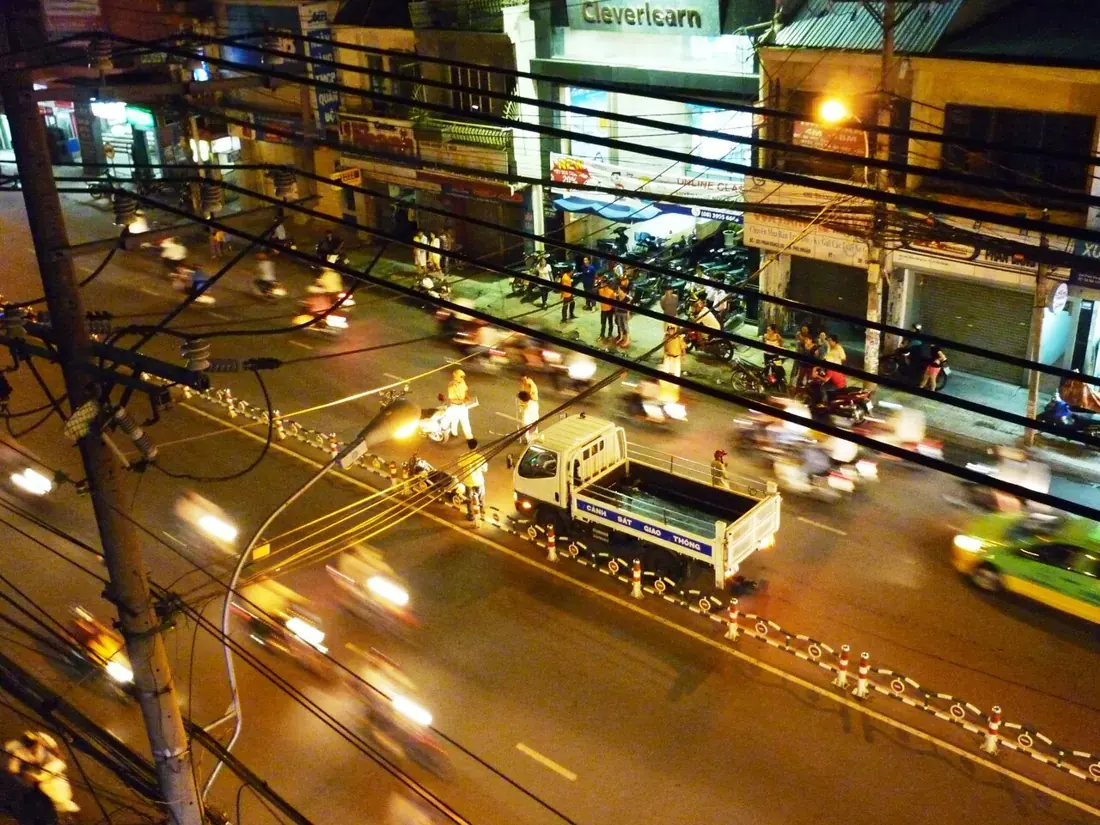
Photo: Evening traffic on a city road by Ngô Trung, CC BY-SA 3.0, via Wikimedia Commons.
In rain, fog, on slippery roads or in poor visibility, drivers are advised to keep a safe distance larger than the standard values, for example more than 100 m between 100 and 120 km/h in dry conditions.
For late arrivals, a pre-booked airport transfer is a comfortable alternative to a long self-drive. See our airport transfers.
Tip from Car Rental Vietnam: If you must drive at night, stop at a rest area whenever your eyes feel heavy, even if you have not been driving long.
More than the dry values.
Dipped headlights.
Pre-book an airport transfer.
Arriving late or expecting rain? Send your flight number, destination and luggage count; quotes include the driver's wage and road tolls, and our team confirms everything with you before you book.
See expressway checklist and what to do after an incident.
At handover, take a moment to find the headlight switch, the windscreen demister and the wiper controls on the car you will drive. Ask the handover team to show you how the controls work while the vehicle is parked. On an unfamiliar car, the time to discover which setting clears the windscreen is before you join the expressway. Test the washers and check whether the wipers clear the glass without streaking. If a light, wiper or tyre appears to have a problem, ask the rental company to address it before you accept the vehicle for the trip.
Save your route and the support number while you have a connection. Pick a designated rest stop or an exit that leads to a place where you can park, and confirm that it is reachable in your direction. Ask a passenger to handle navigation if you are travelling together. If you are alone, set up voice directions before leaving and review any changes while safely parked. Plan the airport pickup, luggage loading and the first break as separate steps. A flight landing time is earlier than the time you will actually be ready to drive.
The Ministry of Construction’s consolidated rules cover both speed and following distance. In rain, fog or on a slippery road, allow more room than the dry-road figures and adjust to the conditions and posted signs. If another vehicle moves into the space ahead, allow the gap to open again. Near an interchange, listen for the route instruction early and give yourself time to read the signs. If you miss the exit, continue to the next suitable one. Ministry of Construction guidance on speed and safe distance.
If a shower turns into a downpour, put off discretionary stops and decisions until you can reach a designated place to park. A passenger can check the onward route while you concentrate on driving. Keep roadside stopping separate from a planned break. If a fault forces you to stop and you cannot get out of a running lane, report your location promptly to the traffic police responsible for the route or the expressway operator and follow their instructions. Our expressway stopping guide explains how the legal requirements differ by where the vehicle stops.
Suppose two travellers land late, have several bags and need to reach a provincial hotel. Compare a private transfer for the first leg with collecting a self-drive car the following morning. Consider the time spent clearing the airport, the hotel's check-in arrangements and whether the person driving has already had a long day. If your booking still starts that night, share the flight number, intended route and latest arrival time before the rental is confirmed. Ask how late collection is handled if the flight is delayed.
For a chauffeured option, give us the terminal, destination, party size and bag sizes. Say if you want a direct trip or a scheduled rest stop, and confirm which parts of the trip are included in the quote. If you prefer to drive, ask at handover what to do if a vehicle fault appears and what contact is available outside office hours. Compare self-drive and driver options for your trip.
Real cars at the Car Rental Vietnam depot


 Book a car


