Contact us
Follow us:


On a self-drive trip, a speeding notice often arrives some time later, long after you have forgotten which stretch you rushed.
Speed limits on Vietnam's expressways are simple in principle but depend on the sign in practice. This guide explains the national rule, the role of signs and practical advice for drivers and renters.
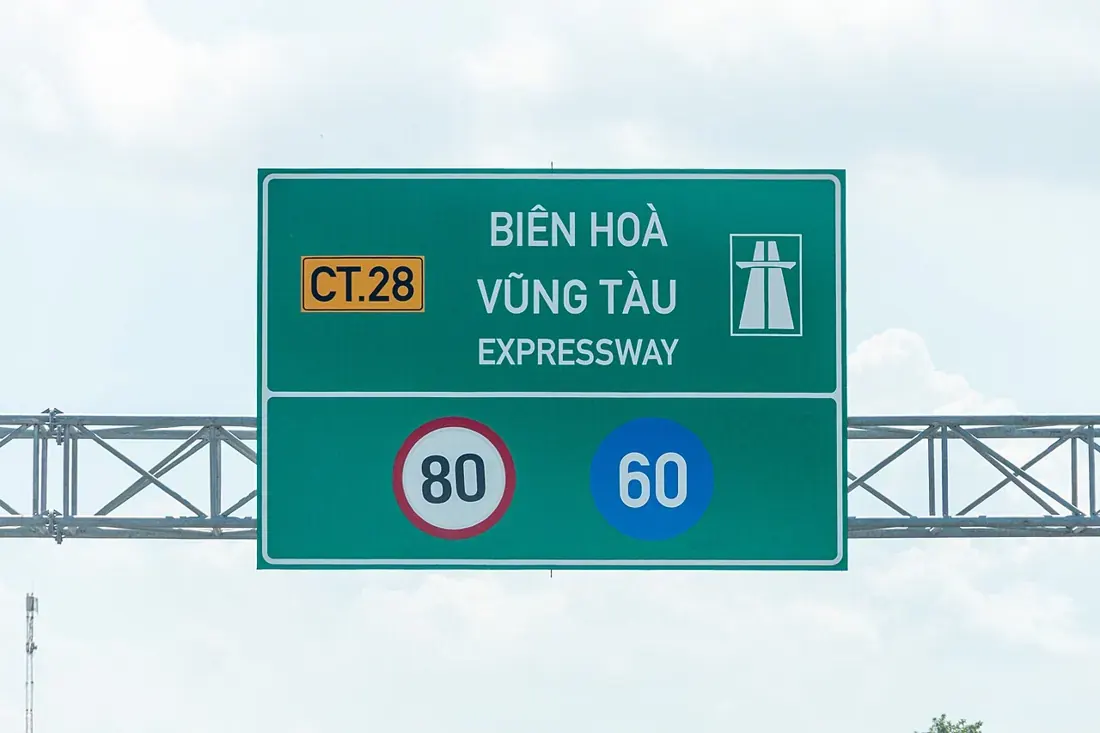
Photo: Expressway sign showing 80 and 60 speed values by MinhVN1863, CC BY-SA 4.0, via Wikimedia Commons.
Circular 38/2024/TT-BGTVT, in force since 1 January 2025, sets the maximum operating speed on expressways at 120 km/h and the minimum at 60 km/h. Where the design speed is 60 km/h, the minimum follows the approved traffic organisation plan (HCMC Department of Transport).
The maximum and minimum values for each section, including ramps, are set in the approved traffic plan. In practice the speed shown on the sign or lane marking is what applies (LuatViet Nam).
If a sign near a work zone shows 80 km/h, that number applies even if the road is wide and empty. Use cruise control within the limit to keep a steady pace, and leave at least the safe following distance. If you feel tired, exit at the next stop instead of slowing in the lane. On long legs, a car with a driver means you do not have to watch the speedometer all day.
Tip from Car Rental Vietnam: Turn on the speed alert in your navigation app, but always follow the posted signs; many expressway sections are limited to less than 120 km/h.
120 km/h under the national rule, subject to signs.
60 km/h, with exceptions where design speed is 60.
Fines go to the owner and may be passed on later.
Rather not watch the speed limit all day? Send your pickup point, group size and dates; quotes include the driver's wage and road tolls, and our team confirms everything with you before you book.
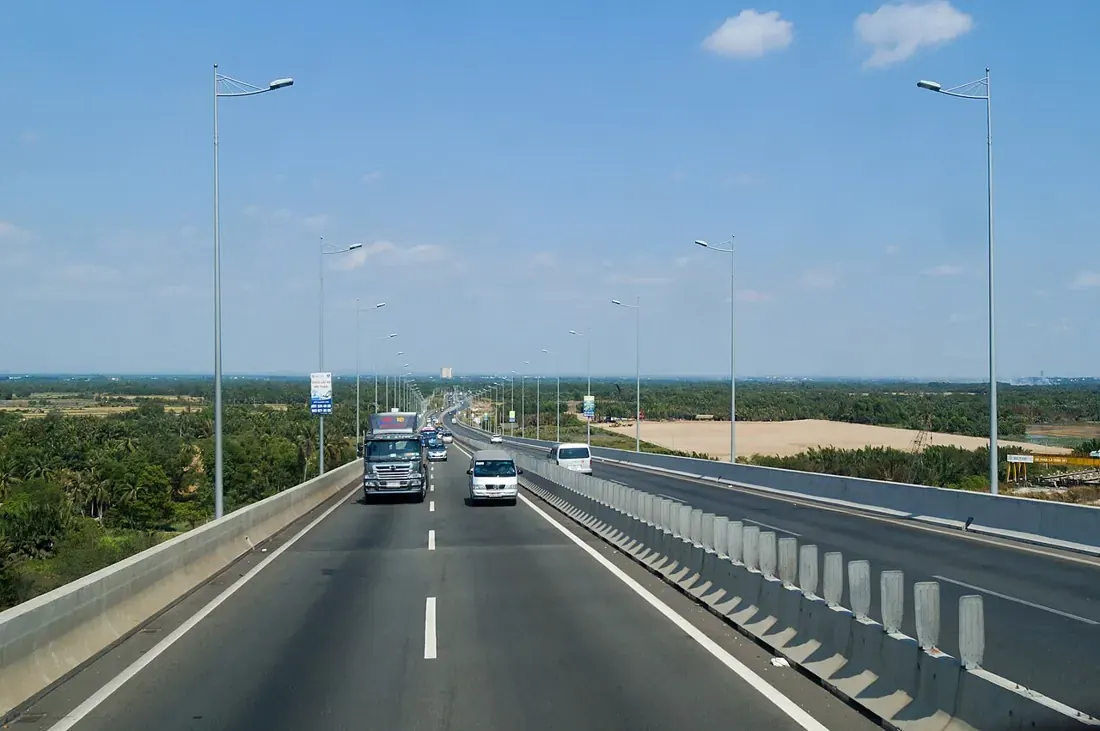
Watch for signs after each junction, since limits can change by section. Use cruise control where safe.
Slow down in rain and fog regardless of the posted limit.
See following distance and 10 expressway mistakes.
Is 120 km/h allowed everywhere? Only where signs show it.
Is there a minimum? Yes, as signed.
Vietnam’s expressway speed framework sets an upper limit of 120 km/h. The speed actually permitted on a particular section, including entrance and exit ramps, comes from its approved traffic arrangement and posted signs. The general minimum in the framework is 60 km/h, with a separate arrangement for expressways designed for 60 km/h. When preparing to drive, focus on reading the signs that apply to the road you are entering. A national maximum is a poor figure to use for estimating your arrival time.
Watch for a change when the road layout changes. On an entrance ramp, your first sign may apply only to the ramp. On the main road, check whether the sign applies to the lane you are using or a vehicle category indicated by a supplementary panel. Near a work zone, look for temporary instructions and give yourself time to adjust smoothly. After leaving the expressway, check the first signs on the connecting road instead of carrying the expressway speed into the next town.
Suppose a passenger’s phone still displays the previous limit while the next road sign shows a lower number. Use the posted information for your section. Ask the passenger to help with directions and turn announcements while you keep your attention on signs, vehicles and lane markings. If several signs appear together and you are unsure which one applies, avoid assuming the largest number is yours. Plan ahead for junctions so there is time to understand the signs before the road splits.
Allow extra time for traffic, reduced visibility and road works. Conditions can make a pace below the posted maximum more appropriate. If you are looking at a route online before travelling, note which parts are expressway, ramps, city streets or mountain roads. An estimate made by dividing the whole distance by one expressway speed will leave out urban traffic, breaks and slower connections. Build a margin into a trip with a flight, train or hotel check-in.
Send Car Rental Vietnam the full itinerary and any fixed arrival deadline. If your group has several large suitcases, include the dimensions or approximate sizes so the team can advise on space as well as seats. Ask for a self-drive quote if you want to choose your own pace, or request a private driver for a route with several junctions or stops. If you have a late arrival or want to break the drive for a meal, add that when asking for a quote. This lets the team check the schedule and clarify any waiting or extra stops in writing.
If you need an airport transfer after a long drive, give the flight time as well as the terminal. Plan enough time for the approach to the airport and unloading, which can add time beyond the drive shown on the map.
Send your pickup point and travel date for a quote.
Sources — Ministry of Construction, consolidated speed and distance rules, Government explanation of expressway speed limits.
Real cars at the Car Rental Vietnam depot


 Book a car


