Contact us
Follow us:




Checking a message at the wheel or forgetting to remind the back seat to buckle up: small slips like these now carry fines that are anything but small.
Phones and seat belts are two small habits that make every drive safer. This guide shares the rules and a few easy routines for drivers and groups.
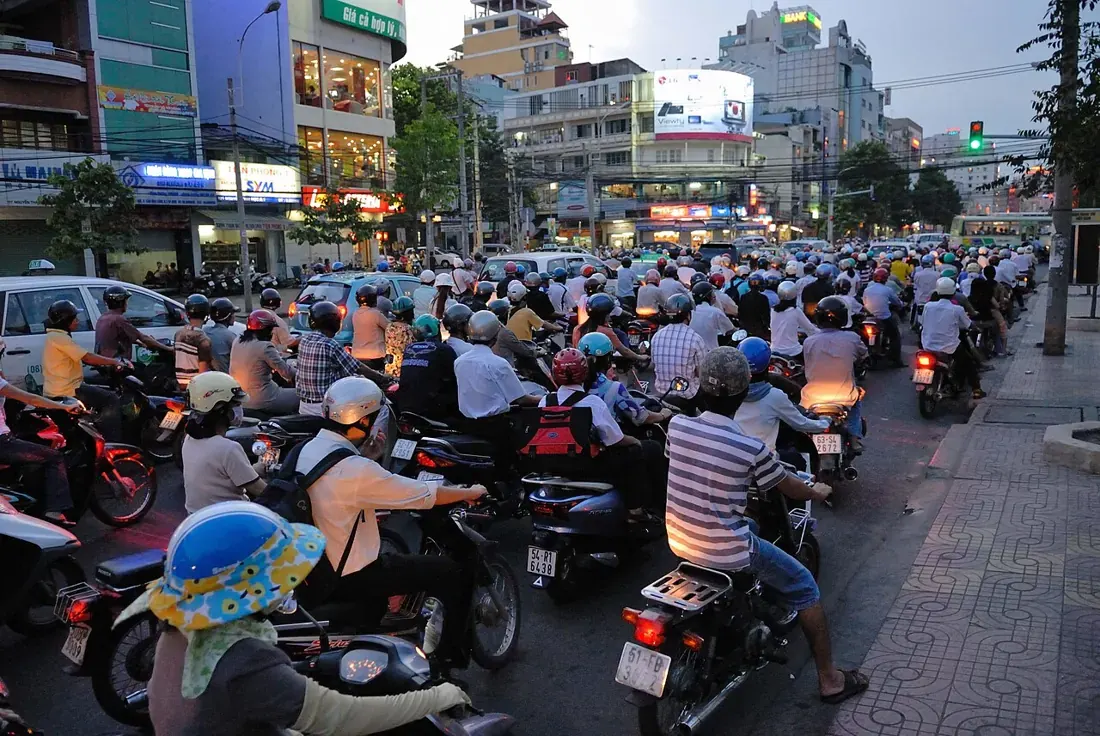
Photo: Busy street with motorbikes by M M from Switzerland, CC BY-SA 2.0, via Wikimedia Commons.
Using a phone or other electronic device by hand while driving a moving vehicle is subject to a fine of VND 4 to 6 million. Not wearing a seat belt as a driver, or carrying a passenger without a belt in a seat that has one, is subject to VND 800,000 to 1 million.
With a chauffeured trip, your driver keeps both hands on the wheel and handles navigation, so you can use your phone as a passenger. Take a look at car rental with driver.
Tip from Car Rental Vietnam: Before you move off, hand your phone to the front passenger to manage navigation and messages.
A holder is a good habit; set the route before you move.
Yes where a belt is fitted.
The driver.
Rather sit back and use your phone freely? Send your pickup point, group size and dates; quotes include the driver's wage and road tolls, and our team confirms everything with you before you book.

Most phone-related fines happen at the moment drivers touch the screen to check a map. Before setting off, enter the destination, put the phone in a mount and turn on voice guidance. Let a passenger handle calls and messages. Everyone in the car, including rear passengers, should wear seat belts where the vehicle has them. On longer trips, plan a break every two hours to check messages while parked. See red light fines and drink-driving rules.
When you collect a self-drive car, spend a few minutes getting the cabin ready while it is parked. Check that everyone has an assigned seat and can fasten the belt at that seat. Ask the handover team to show you how to reach the buckle if it sits between cushions or beside a folded seat. If a belt does not fasten, raise it before leaving and ask for the seating arrangement or vehicle to be reviewed. Move bags that cover a buckle or prevent a passenger from sitting properly. If you are travelling with children, confirm the restraint needs and compatibility with the assigned car before pickup.
Vietnam's road traffic law requires drivers and passengers to wear seat belts at seating positions equipped with them. The rule applies to rear seats as well as the front. Make a belt check part of every departure, including after a short fuel stop or a change of seats. On a group trip, one person can check that passengers are ready before telling the driver to leave. That is easier than trying to sort out seats once the car is moving.
Before leaving, save the actual vehicle entrance at the destination. A hotel may have a guest entrance and a different driveway for cars. Ask a passenger to watch the route and call the hotel if directions are unclear. If you are driving alone, turn on voice guidance before setting off and let incoming calls go unanswered until you can park somewhere permitted. A phone mount can help you hear or see directions, but it does not make tapping through messages a sound plan while driving. The law prohibits holding and using a phone or other electronic device by hand while driving a moving vehicle.
For example, imagine you are approaching an airport and a message says the meeting point has changed. If someone is riding with you, ask them to read the updated instructions and confirm the terminal. If you are alone, continue until you can park in an appropriate place and check the message there. On an expressway, plan a designated stop or use a suitable exit. If a map sends you past your turn, allow it to recalculate instead of handling the phone while moving. A missed turn can be built into your schedule more easily than a rushed manoeuvre.
For a self-drive trip, tell the rental team which car you plan to collect and ask about phone mounting, passenger seating and any restraint you need. If your arrival is late or the day involves several pickups, compare a chauffeured transfer for that part of the itinerary. Tell us the pickup location, destination, number of travellers and bag sizes so we can check the vehicle rather than assume the whole party and its luggage will fit. Compare self-drive and chauffeured booking options.
If you are sharing the driving, agree who will navigate each leg and where you can stop to switch drivers. Check in advance that each intended driver meets the rental requirements. When the group changes seats after a stop, do the belt check again before moving.
Real cars at the Car Rental Vietnam depot


 Book a car


