Contact us
Follow us:


EV or petrol/diesel for the Tết trip home is a question many families are asking this year. Each has strengths depending on distance, passengers and the charging situation where you are going. This is a neutral comparison so you can decide.
Diesel usually costs more than petrol, but consumption differs by vehicle; compare the total for your actual distance.
Charging stops versus refuelling time, luggage space, passenger count and terrain. Some families take an EV for city errands over Tết and a petrol car for the long leg.
If you would rather not think about fuel or charging, chauffeur prices include fuel and tolls, and a driver who knows the road handles the stops.
| Situation | EV | Petrol or diesel |
|---|---|---|
| Hometown under 150 km away, with chargers | Ideal; often no charging stop needed | Fine |
| Mountain hometown, passes, few chargers | Needs careful planning and a margin | More flexible |
| Seven or more people, lots of Tết luggage | Limited choice | Many 7- and 16-seat options |
| Staying in the city, short Tết outings | Quiet, no fuel burned in traffic jams | Fine |
| Open itinerary, maybe extra provinces | Depends on chargers en route | Fuel is available almost everywhere |
Fuel cost is only part of it. Over Tết, waiting time can matter more: refuelling takes minutes, fast charging longer, and expressway chargers may have queues. Then again, petrol stations near city exits are busy on 4 February too. A fair comparison estimates total stopping time for the trip, plus a full charge at home before leaving.
A short trip with chargers in former Bến Tre town. A VF 7 suits: charge at home, drive there and back without stopping, use it for local visits.
Long mountain passes, sparse chargers, cold weather. A petrol 7-seater is more flexible, or a driver who knows the passes.
Many people and bags. A chauffeured 16-seater, with fuel and tolls included, lets everyone rest on the long drive.
You need not choose just one. Many families hire a petrol 7-seater for the long trip home and a small EV for city errands before and after Tết. Others fly in, book an airport pick-up (the driver tracks the flight, with no airport waiting fee), then rent a self-drive EV for the city days.
Travellers taking a sleeper train to central Vietnam can book a station pick-up, then hire locally, petrol or electric depending on hometown infrastructure.
| Vehicle | Luggage guide |
|---|---|
| 4–5 seat (petrol or VF 5) | about 3 suitcases |
| 7 seat | about 4 suitcases |
| VF 7 | Similar to a 5-seat SUV; tell us your suitcase count |
| 16 seat, 9-seat limousine | about 6–8 suitcases |
Tết items such as bánh chưng, hampers and potted flowers take a lot of room; allow for them.
EVs produce no tailpipe emissions, suiting pilot restricted areas such as central Hanoi. Petrol cars from 2022–2025 meet emission level 5 and also comply with the current timetable. With our fleet, the choice mostly comes down to distance, passengers and chargers.
Comparing EV and petrol on daily rate alone misses a lot. A full sheet includes:
Once everything is added up, many families find the gap smaller than expected and decide on convenience: chargers at home or not, how many people, how much luggage. If both options come out level, a chauffeured car with fuel and tolls included is the simplest choice.
For distant hometowns, many families fly or take a sleeper train to the nearest city, then hire there. That lets you match the car to local infrastructure: a city with plenty of chargers suits an EV for daily trips; mountain areas with few chargers suit petrol or a driver. For airport pick-ups the driver tracks the flight and waits through delays with no airport waiting fee; for stations, send the train code and carriage so the driver waits at the exit. Luggage guide: about 3 suitcases in a 4–5 seater, 4 in a 7-seater, 6–8 in a 16-seater.
Mixed answers? Send your route through the quick-quote form and we will suggest a vehicle to match passengers, luggage and local infrastructure.
Yes to the first two and no to the third usually points to an EV; otherwise petrol is more flexible. Both come in 2022–2025 model years.
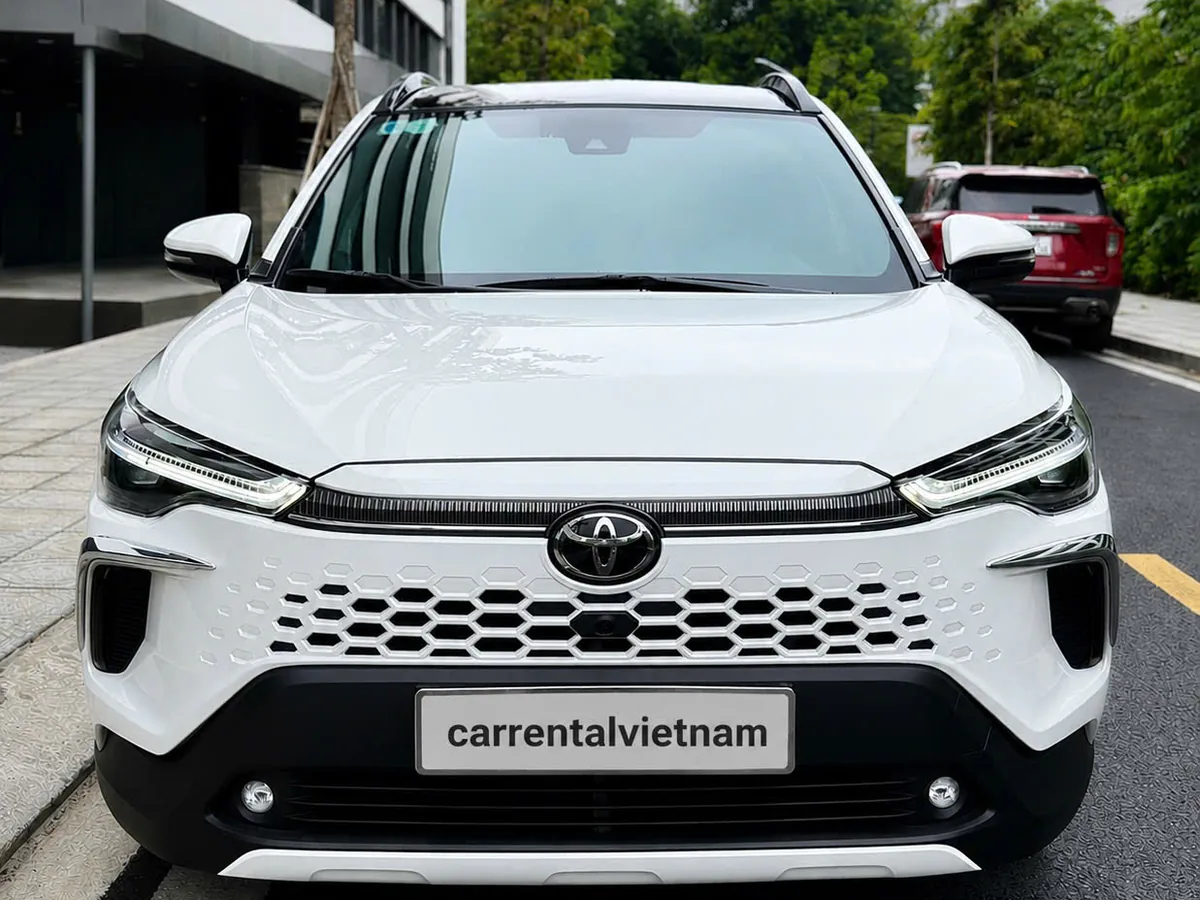
Petrol family car: a 7-seater; self-drive EV: the VinFast VF 7. Going electric? See a Tết 2027 charging plan.
Travelling with young children? Ask in advance and we will fit child seats. Year-end prices run higher; Tết bookings take a deposit of about 10%.
Yes, and they regenerate energy downhill. Plan charging, as mountain areas have fewer stations.
Follow the maker's label on the filler flap; E10 has been widely sold since mid-2026.
An EV is ideal if there is a charger or home charging.
Yes: petrol for the long leg, EV for the city.
2022–2025 cars meet level 5, compliant with the current timetable.
It depends on distance, charging stops and waiting; add up all items before comparing.
Many 16-seaters run on diesel and carry more people and luggage.
Ask when booking; most chauffeured cars are petrol or diesel with fuel included.
By December, to secure a car for peak days.
Real cars at the Car Rental Vietnam depot


 Book a car


